Physical Address
304 North Cardinal St.
Dorchester Center, MA 02124
Physical Address
304 North Cardinal St.
Dorchester Center, MA 02124
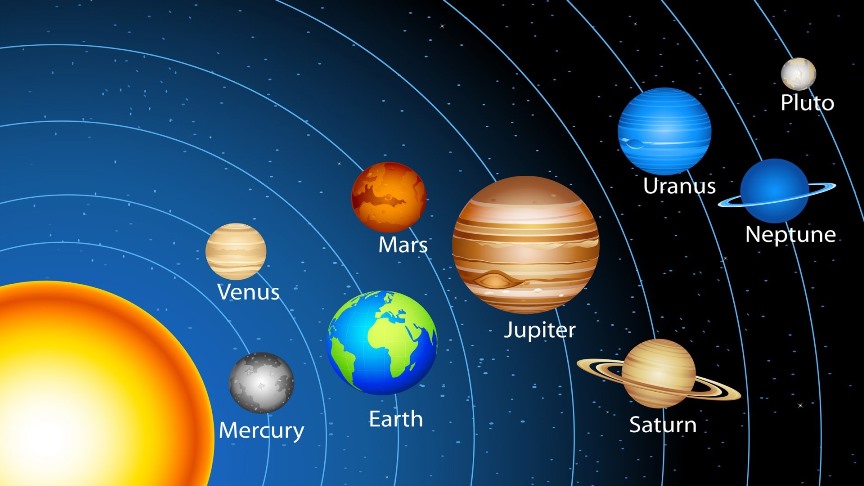
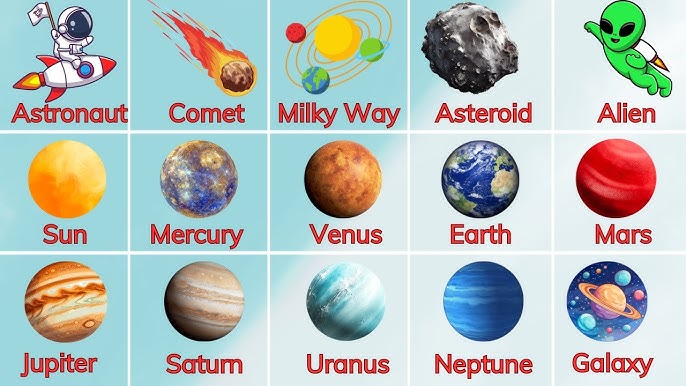
The Solar System is a fascinating topic that captures the curiosity of people of all ages. Learning about the Solar System in English helps us understand more about our universe, expand our vocabulary, and improve our language skills. From the Sun at the center to the farthest planet, Neptune, each part of the Solar System has its own interesting characteristics. In this article, we will explore the planets, important terminology, and how to discuss the Solar System in English. Let’s embark on this educational journey to discover the wonders of space and the English words used to describe them.
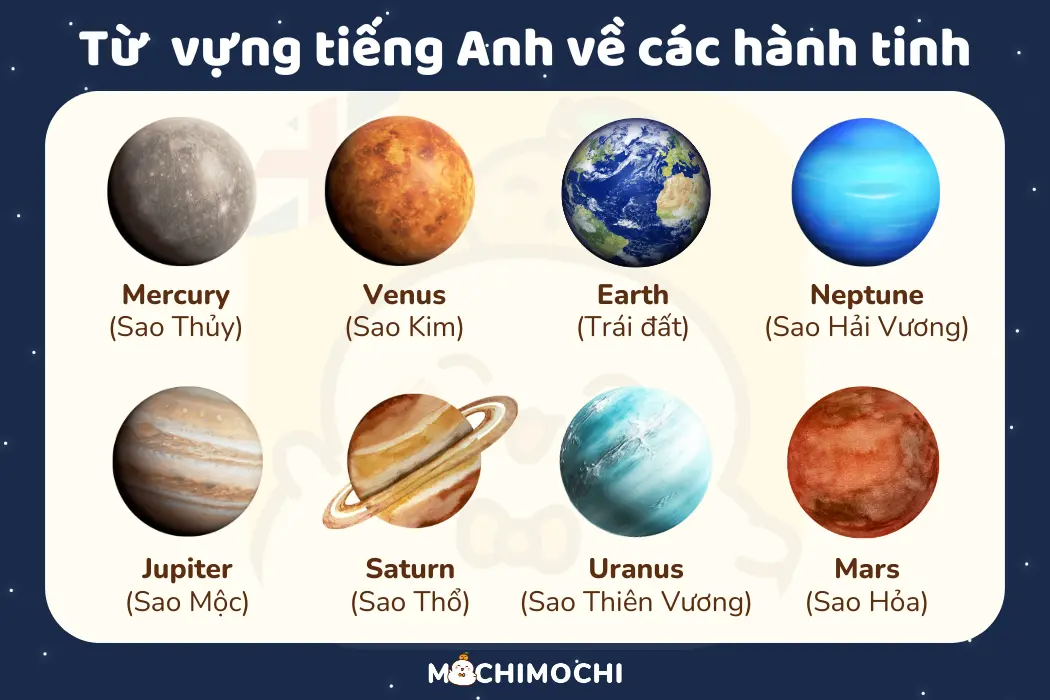
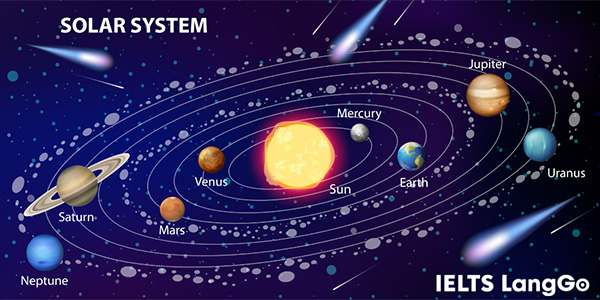
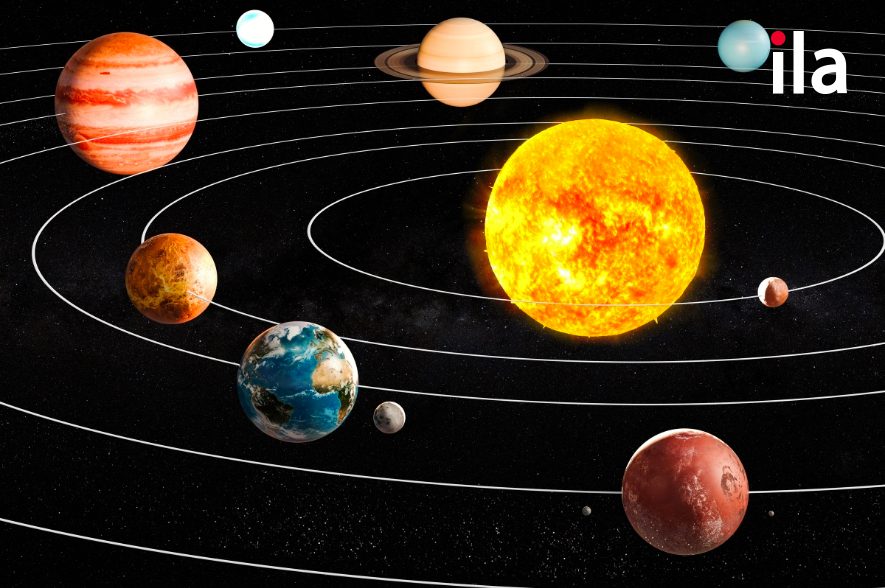
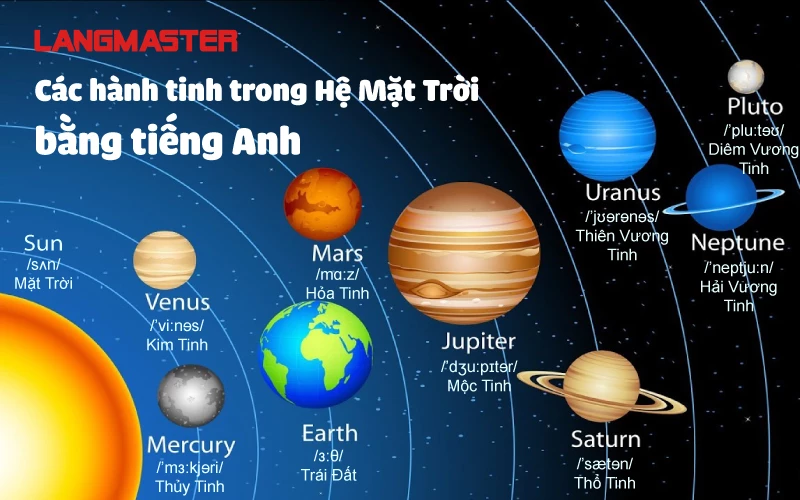
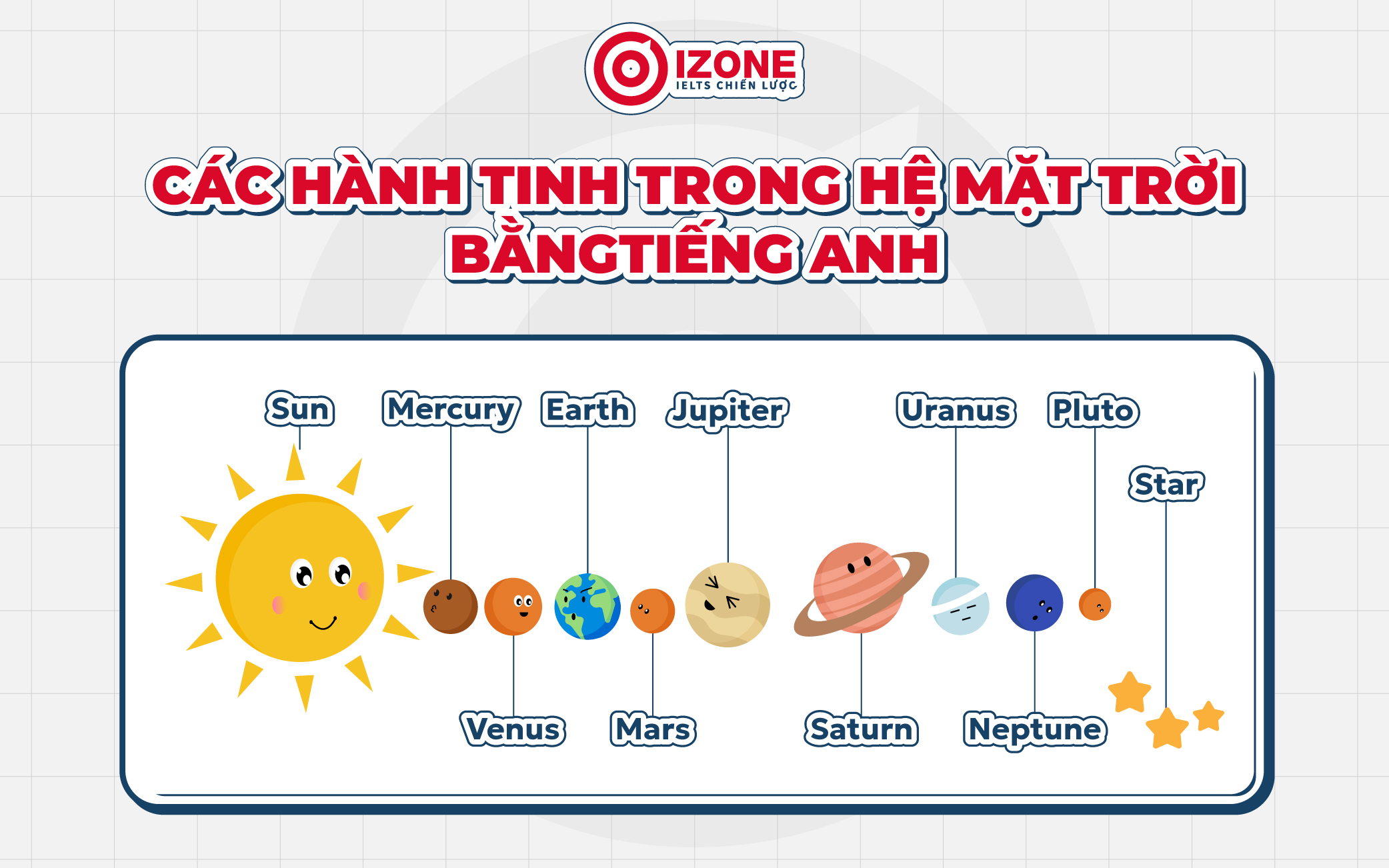
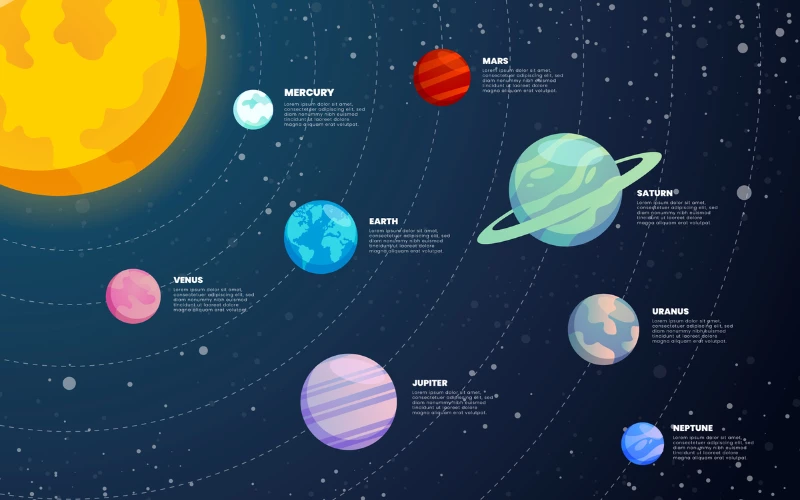
The Solar System is a fascinating collection of celestial bodies that revolve around our central star, the Sun. Formed approximately 4.6 billion years ago, it includes eight major planets: Mercury, Venus, Earth, Mars, Jupiter, Saturn, Uranus, and Neptune. Each of these planets has its own unique characteristics that make it special.
In addition to the eight planets, our Solar System boasts over 150 moons and at least five officially recognized dwarf planets, such as Pluto. Beyond these, countless asteroids and comets wander through space, adding to the dynamic nature of our cosmic neighborhood.
The Sun, which is the heart of the Solar System, is essential for life on Earth. It provides light and warmth, influencing the climates and seasons we experience. Learning about the Solar System opens up a world of exploration and curiosity about the universe we inhabit.
Isn’t it incredible to think about all the wonders that exist beyond our planet? Each discovery we make helps us understand our place in the vast expanse of space. Whether you’re a child or an adult, the mysteries of the Solar System continue to inspire awe and fascination.
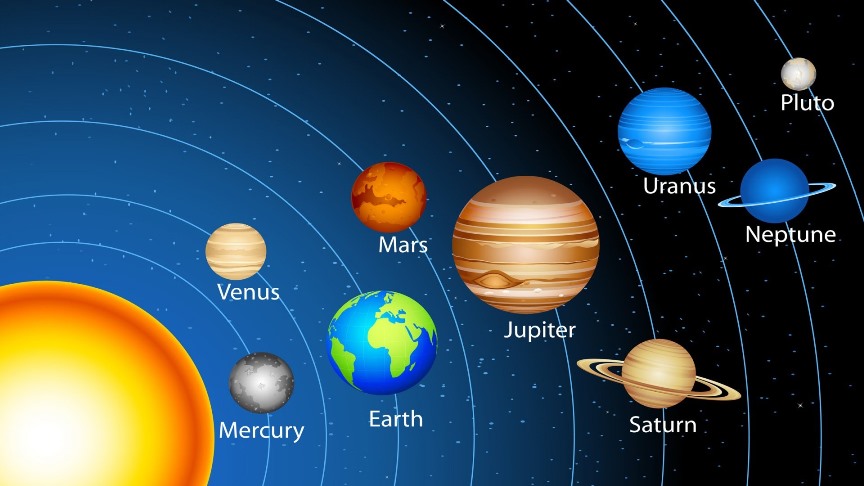
Our solar system is a fascinating place, composed of eight distinct planets. Closest to the Sun is Mercury, a small planet with a scorching surface. Next, we have Venus, known for its thick, toxic atmosphere and high temperatures. Then there’s our home, Earth, a unique planet that supports life with its abundant water.
Following Earth is Mars, often called the “Red Planet” due to its rusty color. Mars has captivated our imagination as we explore the potential for life beyond our own. Beyond the terrestrial planets are the gas giants: Jupiter, Saturn, Uranus, and Neptune. Jupiter is the largest of them all, famous for its Great Red Spot, a massive storm.
Saturn, with its stunning rings, is a sight to behold, while Uranus stands out for its unusual tilt. Finally, there’s Neptune, known for its deep blue color and strong winds. In addition to these eight planets, there are dwarf planets, moons, and countless asteroids that add to the richness of our solar system, making it an endless source of discovery and wonder.
The Sun is a fascinating celestial body and the central star of our solar system. It is a massive sphere of hot plasma, mainly composed of hydrogen and helium, constantly undergoing nuclear fusion that generates enormous amounts of energy. Although we often perceive its light to be yellow, the Sun actually emits white light, which we see filtered through the Earth’s atmosphere.
Its gravity plays a crucial role, holding the solar system together and keeping planets, including Earth, in orbit. The warmth and light from the Sun are essential for life on our planet. They enable photosynthesis in plants, regulate our climate, and provide the energy needed for various ecosystems to thrive.
Spending time in the sun can uplift our spirits, providing both physical warmth and a sense of well-being. In many cultures, the Sun is seen as a symbol of life and vitality. As we appreciate its brilliance in the sky, we are reminded of the Sun’s vital role in sustaining life on Earth and its continuous influence on our daily lives.
Mercury, known as the only metal that remains liquid at room temperature, is a heavy, silver-colored element with the chemical symbol Hg. It’s fascinating how this toxic metal has found various applications in our daily lives, particularly in thermometers, batteries, and even pesticides. Despite its usefulness, caution is essential due to its highly toxic nature.
The name “Mercury” is derived from the ancient Roman god Mercurius, who was revered as the deity of commerce and communication. This connection adds an intriguing layer to the element, highlighting its significance in trade and eloquence throughout history. Interestingly, the planet Mercury, which bears the same name, is the smallest in our solar system and closest to the Sun, experiencing extreme temperatures that can soar as high as 700 K.
Mercury holds a unique position not just chemically but also culturally, representing a blend of utility and myth. Its liquid form and silver appearance captivate our imagination while reminding us to handle it with the respect it demands, given its properties and potential dangers.
Venus, the second planet from the Sun, is often regarded as Earth’s “twin” due to its similar size and proximity. Orbiting at a distance of about 108 million kilometers from the Sun, Venus is the closest neighbor to our planet. However, it’s also the hottest planet in our solar system, with surface temperatures soaring above 460 degrees Celsius.
The planet is known for its thick, toxic atmosphere, primarily composed of carbon dioxide, which traps heat through the greenhouse effect. This makes Venus an extreme environment, contrasting sharply with Earth’s habitable conditions.
In addition to its astronomical significance, Venus holds cultural importance as well. Named after the Roman goddess of love and beauty, it embodies notions of allure and desire. Often referred to as the “morning star” or “evening star,” it shines brilliantly in the sky, captivating observers and inspiring countless myths and artworks throughout history. Thus, Venus serves as both a fascinating celestial body and a symbol of beauty in our cultural imagination.
Earth is the third planet from the Sun, nestled between Venus and Mars. This beautiful blue planet is where we call home, featuring diverse landscapes, vibrant ecosystems, and a plethora of life. From space, Earth presents an awe-inspiring view, showcasing its swirling clouds and shimmering oceans, making it truly one of a kind in our solar system.
The temperature on Earth’s surface can vary dramatically. It can reach as low as −89.2 °C in Antarctica and soar to a maximum of 56.7 °C in the hottest deserts. This remarkable range of temperatures contributes to the rich diversity of climates and environments found all over the planet.
Interestingly, the word “Earth” has its roots in Old English, highlighting its connection to the soil and land. Unlike other planets in our solar system, its name doesn’t stem from Greek or Roman mythology, emphasizing its unique identity. Earth’s rotation around the Sun, along with its perfect distance from it, allows life to thrive in various forms, showcasing the incredible balance of nature.
As we explore the universe, Earth remains a beacon of life, reminding us of the beauty and complexity of our existence. It is our responsibility to protect and cherish this precious home, ensuring it remains vibrant for generations to come.
Mars, often referred to as the “Red Planet,” is the fourth planet from the Sun and lies between Earth and Jupiter. Its striking orange-red hue is due to iron oxide, or rust, on its surface. Although Mars is only slightly more than half the size of Earth, it is the second smallest planet in our solar system, just larger than Mercury.
The planet is known for its rocky, desert-like landscape, dotted with the largest volcanoes and canyons in the solar system. Mars has a very thin atmosphere, composed mainly of carbon dioxide, making it inhospitable for human life as we know it. However, its intriguing features and proximity to Earth make it a prime target for exploration.
Currently, there are eight spacecraft orbiting Mars, including the Mars Odyssey and the Mars Reconnaissance Orbiter. These missions help scientists study the planet’s atmosphere and geology, while ongoing research like the MAVEN mission focuses on understanding Mars’s climate and potential for past life. With such rich potential for discovery, Mars continues to capture our imagination and holds the promise of future exploration.
Jupiter, known as Jove in Roman mythology, stands out as the largest and most massive planet in our solar system. Orbiting the Sun at a staggering distance of about 778 million kilometers, it takes approximately 11.86 years to complete one full orbit. Its immense size and striking features make it one of the brightest objects in the night sky.
This gas giant is fascinating not only for its size but also for its stunning atmospheric phenomena. One of the most intriguing aspects of Jupiter is the Great Red Spot, an enormous storm that has raged for hundreds of years. Unlike solid planets, Jupiter lacks a definitive surface; it is a swirling mass of gases, primarily hydrogen and helium, giving it a unique and dynamic appearance.
Moreover, Jupiter is often compared to a star due to its massive size, although it never accumulated enough mass to initiate nuclear fusion. This giant planet’s influence extends beyond its own atmosphere, contributing to the gravitational balance of our solar system and capturing many comets and asteroids in its embrace. Jupiter truly embodies the wonders of our celestial neighborhood.
Saturn, the sixth planet from the Sun, is truly a marvel of our solar system. Known as the second largest planet after Jupiter, it has captivated astronomers and stargazers alike. With an average radius of about 58,232 kilometers, Saturn stands as a giant ball of gas, primarily composed of hydrogen and helium.
One of the most enchanting features of Saturn is its stunning rings. These rings, made up of ice and rock particles, create a beautiful halo that sets Saturn apart from other planets. They are not just a visual delight; they are also a vital aspect of Saturn’s atmosphere and gravitational dynamics.
Saturn’s distance from the Sun averages around 1.4 billion kilometers, which adds to its mysterious charm. It takes a remarkably long time to orbit the Sun—about 29.5 Earth years! Each of its many moons, including the large moon Titan, adds to the intrigue, making Saturn not just a planet but a mini solar system in its own right.
As we continue to explore and learn more about Saturn, we uncover the secrets of its magnificent beauty and complex atmosphere. It’s a reminder of the wonders that exist beyond our home planet.
Uranus is the seventh planet from the Sun and is fascinating for a number of reasons. Named after the Greek god of the sky, its Latin name “Ūranus” reflects its celestial significance. This ice giant stands out in our solar system as the third largest planet, with a diameter about four times that of Earth.
What makes Uranus particularly interesting is its unique composition. Largely made of water, ammonia, and methane in solid form, it appears as a striking cyan color, which adds to its mystique. The planet is incredibly cold, making it one of the coldest in our solar system, and it orbits the Sun at an average distance of about 1.78 billion miles (2.87 billion kilometers).
Discovered by William Herschel in 1781, Uranus is not just a giant; it also has a peculiar tilt on its axis, causing extreme seasonal variations. Its ring system and numerous moons add to the complexity and beauty of this distant planet, making it a subject of interest for astronomers and space enthusiasts alike.
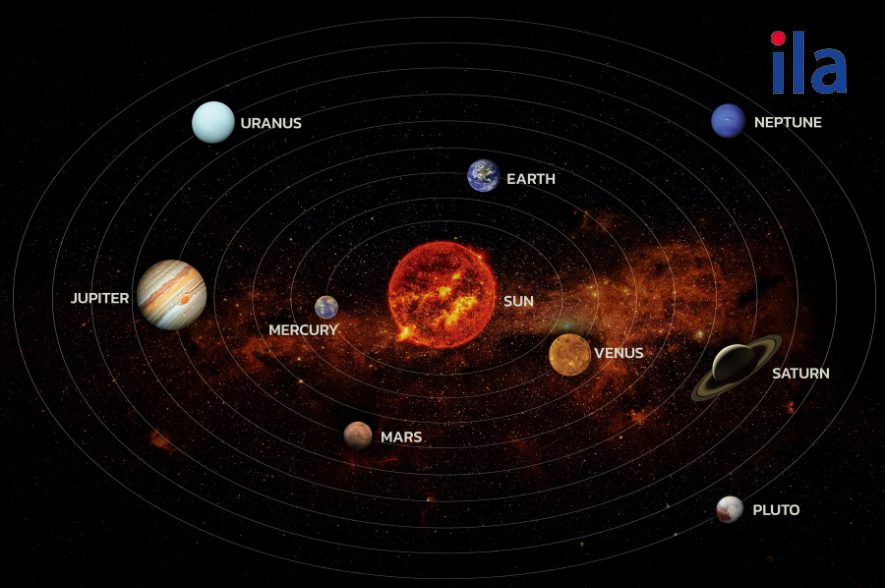
In conclusion, our Solar System is a fascinating realm filled with diverse celestial bodies and phenomena. From the powerful Sun at its center to the distant icy realms of the outer planets, each component plays a vital role in the intricate dance of gravitational forces. The eight planets, their moons, and countless asteroids and comets all contribute to the dynamic nature of this cosmic environment. Understanding the Solar System not only enhances our knowledge of the universe but also inspires future exploration and discovery. As we continue to study these celestial wonders, we uncover more about our place in the vast cosmos and the origins of life itself.